
Cleaning tarnished silver might seem overwhelming, but it’s quite manageable with effective techniques you can use at home. Silver naturally tarnishes due to exposure to air and moisture, but several straightforward strategies can restore its shine. Let’s dive into the best methods for cleaning silver effectively.
Understanding Silver Tarnish
Tarnish appears as a grayish-black film that develops on silver from a chemical reaction with sulfur-containing substances in the air. While this process is unavoidable, regular cleaning can significantly slow down the tarnishing and keep your silver items looking vibrant.
Effective Methods for Cleaning Silver
1. Baking Soda and Aluminum Foil Method
This popular method is highly effective for cleaning tarnished silver. Here’s how to do it:
Materials Needed:
- Aluminum foil
- Baking soda
- Hot water
Steps:
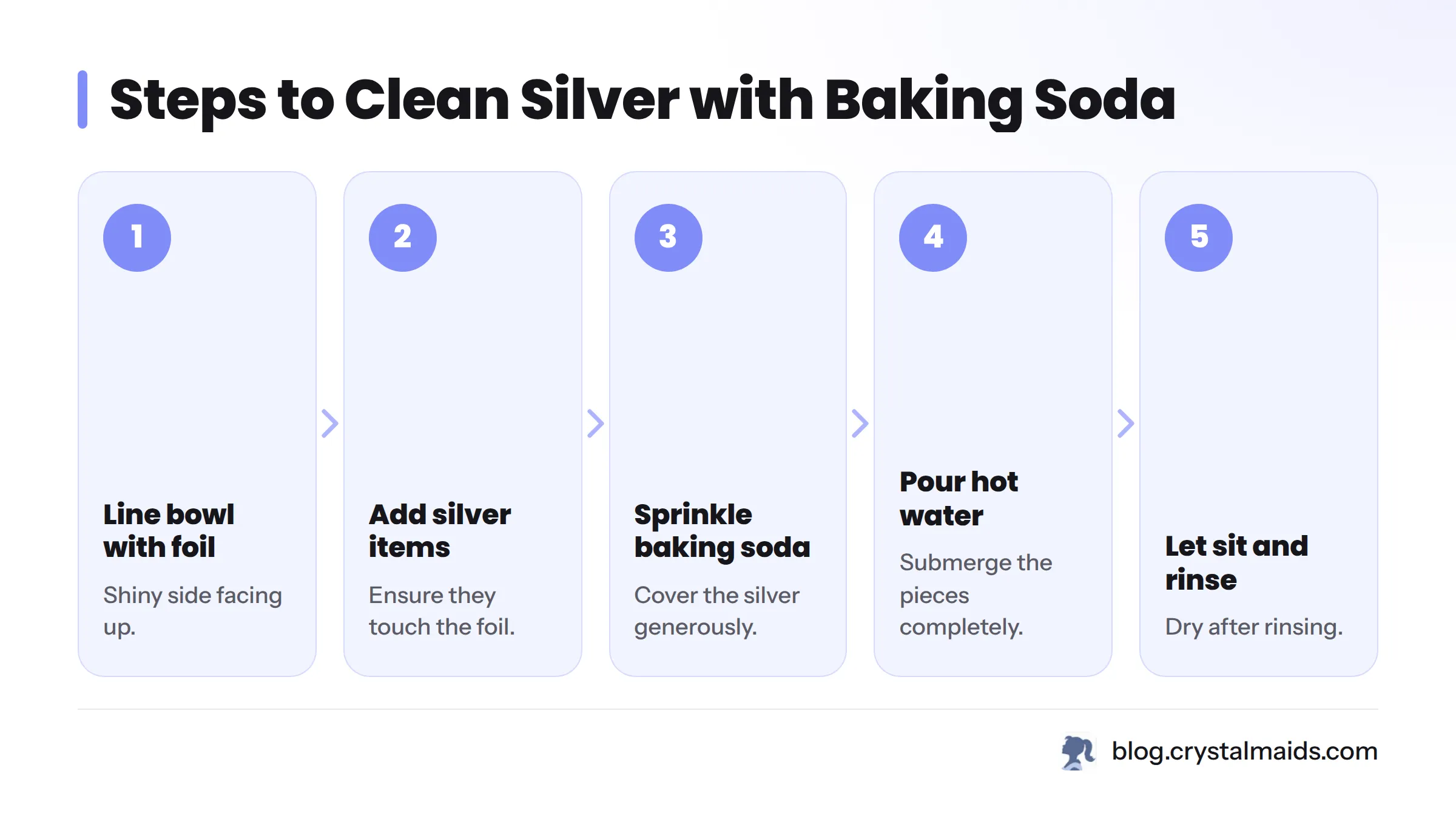
- Line a bowl with aluminum foil, shiny side facing up.
- Place your silver items in the bowl, ensuring they touch the foil.
- Sprinkle a generous amount of baking soda over the silver.
- Pour hot water into the bowl until the pieces are submerged.
- Let sit for a few minutes, then rinse and dry.
This method utilizes an electrochemical reaction to lift tarnish without scratching the silver surface.
2. Vinegar and Baking Soda
This simple mixture is another effective cleaning solution:
Materials Needed:
- White vinegar
- Baking soda
- Soft cloth
Steps:
- Combine 1/2 cup of white vinegar with 2 tablespoons of baking soda in a bowl.
- Soak your silver items in the mixture for a couple of hours.
- Rinse under warm water and dry with a soft cloth.
This method not only cleans but also disinfects the items.
3. Toothpaste Approach
Toothpaste can also be an effective silver cleaner:
Materials Needed:
- Non-gel toothpaste
- Soft cloth or toothbrush
Steps:
- Apply a small amount of toothpaste to the tarnished areas.
- Gently rub using a soft cloth or toothbrush, paying attention to grooves and patterns.
- Rinse thoroughly and dry with a clean cloth.
This approach is best for small pieces or intricately designed items, as it may not be suitable for larger objects.
4. Professional Silver Polish
For a more traditional approach, consider using commercial silver polish:
Application Steps:
- Follow the manufacturer’s instructions for application.
- Buff the silver using a soft cloth until it shines.
- Rinse or wipe off any residue and dry thoroughly.
This method often yields quick results, especially for heavily tarnished pieces.
Maintenance Tips to Prevent Tarnishing
Preventive measures save time and effort in the long run. Here are some tips:
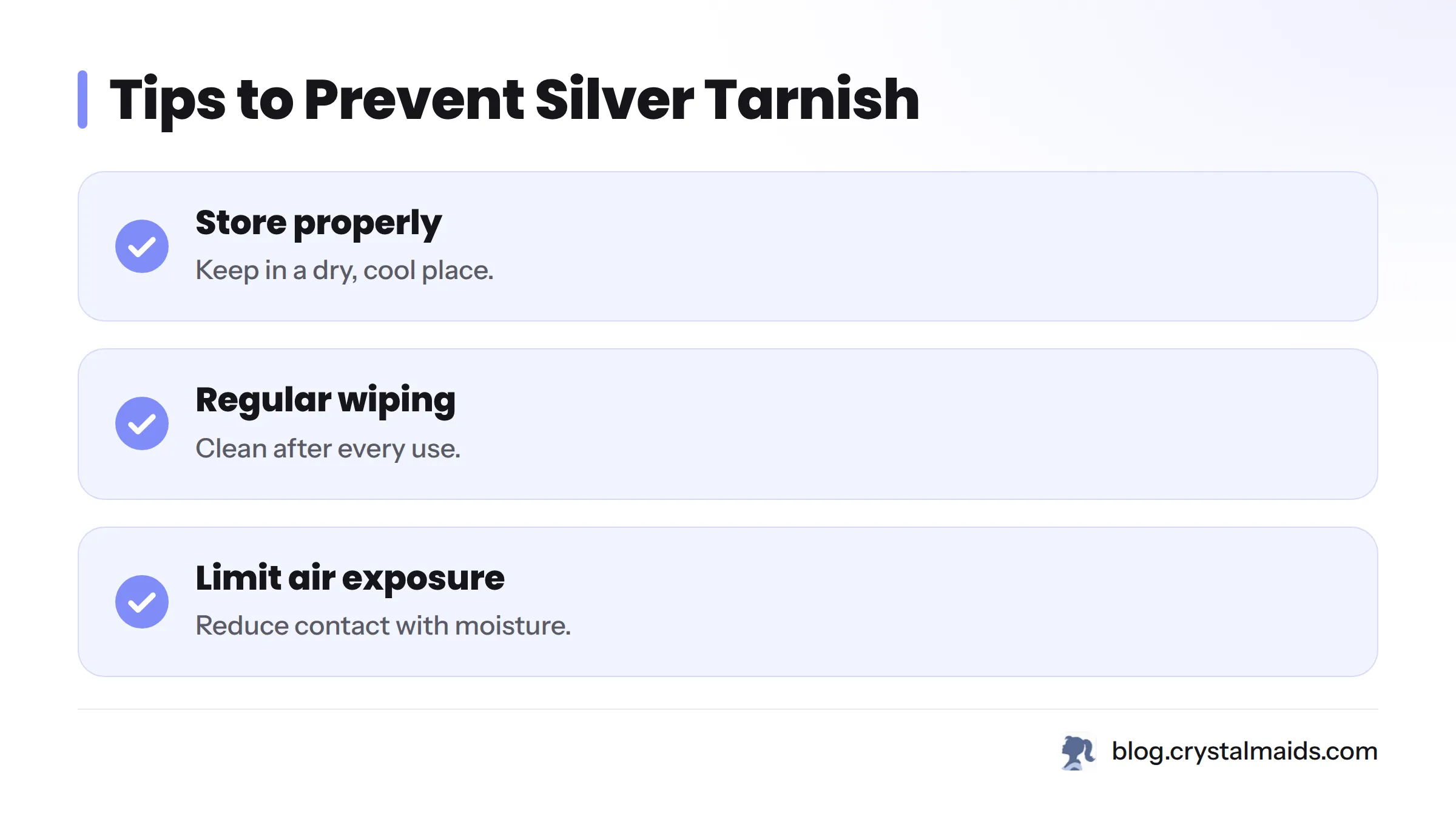
- Store Properly: Keep silver in a dry, cool place, preferably in anti-tarnish pouches.
- Regular Wiping: Use a soft cloth to clean silver items after use.
- Limit Air Exposure: Try to minimize contact with air and moisture when possible.
When to Seek Professional Help
For items with significant sentimental or monetary value, such as antiques or inherited pieces, consider consulting a professional. They can clean these treasures safely to avoid potential damage.
Conclusion
Cleaning silver at home can be straightforward and satisfying. Whether you choose a DIY method like baking soda or opt for a professional polish, you can restore your silver's beauty in just a few minutes. Enjoy displaying your sparkling silver pieces with pride!
For more practical cleaning tips, check out Crystal Maids' cleaning services. A clean living space enhances your overall well-being!
Video Guide
If you prefer visual instructions, watch this helpful video on cleaning silver using baking soda:
Best Way To Clean Silver Safely - With Baking Soda and Foil
Sources
Related: other baking soda cleaning uses