
Understanding Mold and Its Risks
Mold is a prevalent household issue that can lead to significant health problems, especially for individuals with allergies, respiratory issues, or compromised immune systems. It flourishes in damp, humid environments and can affect numerous surfaces, posing threats to both health and property.
Common Types of Mold Found in Households
- Aspergillus: Frequently found inside homes, particularly in areas affected by water damage.
- Penicillium: Commonly present in dust and can grow on various materials.
- Cladosporium: Typically thrives outdoors but can also be found indoors.
- Stachybotrys (Black Mold): Noted for its potential toxicity and associated health concerns.
How Vinegar Interacts with Mold
White vinegar contains acetic acid, known for its antifungal properties. This makes vinegar a popular choice for home cleaning, as it effectively combats various household pests and debris, including mold.
What is Acetic Acid?
Acetic acid is a colorless organic compound responsible for vinegar's distinct smell and taste. It can kill mold spores upon contact, making it a practical cleaner for mild mold infestations.
Research Findings on Vinegar's Effectiveness
Numerous studies affirm vinegar's efficacy against mold, particularly varieties commonly found in households. One study indicated that vinegar could kill around 82% of mold species. However, it’s essential to understand the situations in which vinegar might not be effective.
Studies Supporting Vinegar's Efficacy
- Research findings show that vinegar's antifungal properties are especially potent against standard mold types on both porous and non-porous surfaces.
- Nonetheless, heavy mold infestations or those that are deeply entrenched often necessitate stronger chemical treatments.
Factors Influencing Vinegar's Success Against Mold
While vinegar is not an all-encompassing solution for mold issues, several factors influence its effectiveness:
Surface Types and Treatments
- Porous Surfaces: Vinegar may not sufficiently penetrate porous materials like wood, limiting its ability to eradicate mold.
- Non-Porous Surfaces: On surfaces such as glass, tiles, or plastics, vinegar tends to be very effective.
- Heavy Infestations: For severe mold conditions, alternative treatments like commercial mold removers are recommended.
Alternative Methods for Mold Removal
Vinegar is a useful tool, but it's essential to compare it with other mold removal strategies to select the best option for your situation.
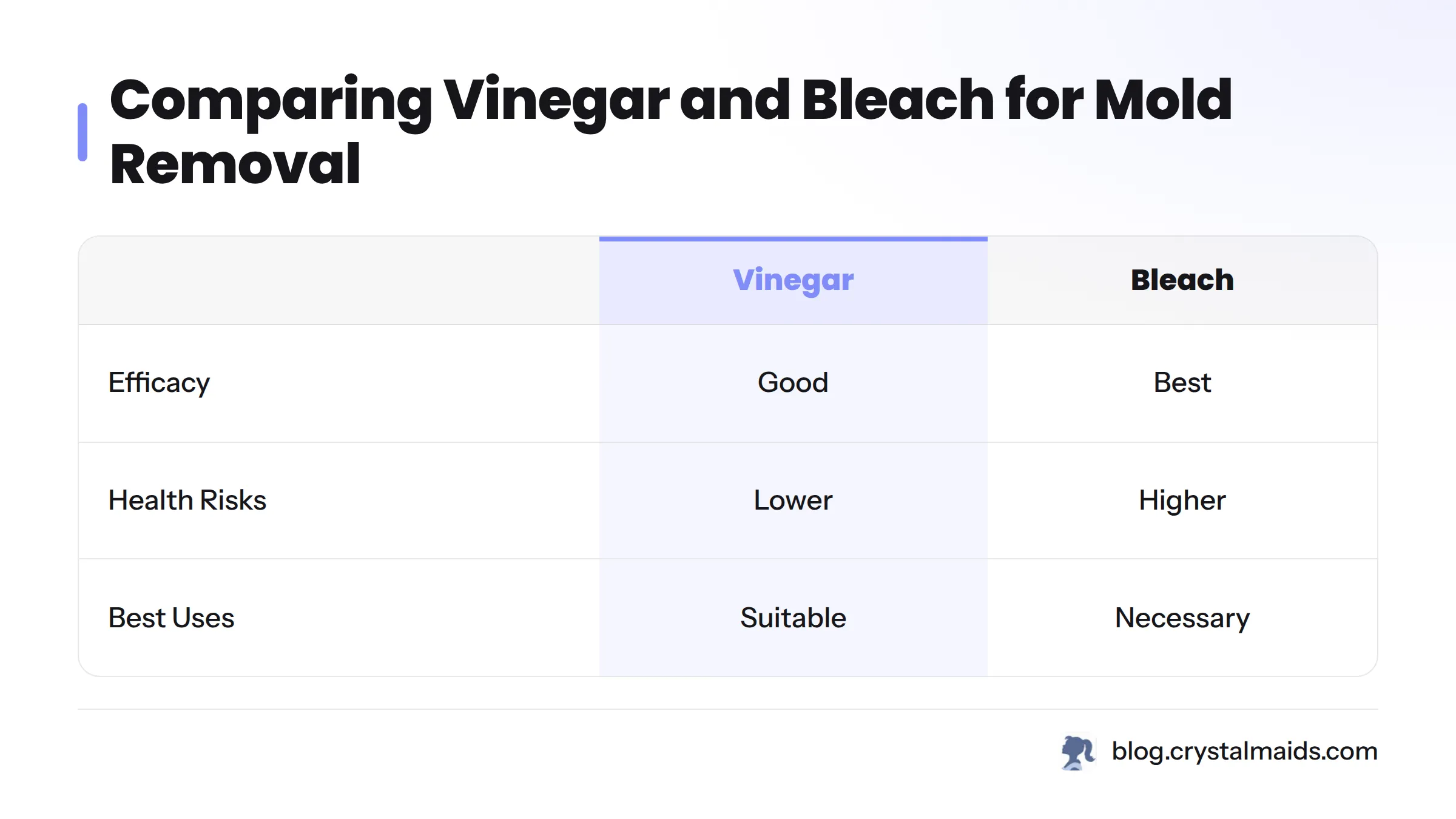
Comparing Vinegar and Bleach
- Efficacy: While bleach is effective against mold on non-porous surfaces, vinegar may not infiltrate as deeply.
- Health Risks: Bleach can emit toxic fumes, whereas vinegar is generally safer but still should be used with caution.
- Best Uses: Vinegar is suitable for light mold and mildew, while bleach may be necessary for heavier infestations.
Other Options for Heavy Infestations
- Hydrogen Peroxide: This compound effectively kills mold and mildew, particularly on porous surfaces.
- Commercial Mold Removers: These typically include strong chemicals designed to address severe mold problems.
Conclusion: Is Vinegar Worth It for Mold?
In summary, vinegar is effective against various mold types, particularly for light infestations. However, it's crucial to know when to use it and understand its limitations for effective remediation. For substantial mold issues, consider exploring other cleaning agents or seeking professional advice.
Final Thoughts and Recommendations
- Regular Maintenance: Help prevent mold growth by maintaining low humidity levels in your home.
- Test Areas: Always test any cleaning solution on a small, inconspicuous spot prior to full application.
- Expert Insights: For extensive infestations, professional guidance on mold removal strategies can be beneficial.
Suggested FAQ
- Does vinegar kill black mold? Vinegar can eliminate surface-level black mold but may not eradicate root systems in porous materials.
- Is vinegar better than bleach for mold? It depends on the specific situation; vinegar is safer, while bleach is more effective on non-porous surfaces.
- Why does mold come back after vinegar? Mold may reappear if spores remain or if conditions become conducive to regrowth.
- Can I use vinegar on all types of surfaces? No; avoid using vinegar on porous surfaces without testing, as it may not be effective.
- How long should I leave vinegar on mold? Generally, letting vinegar sit for at least an hour before wiping is recommended.
For more cleaning advice, check out easy DIY cleaning solutions.
Sources
- EPA mold guidance
- CDC guidance on mold safety How to Kill Mold With Vinegar Does Vinegar Kill Mold? The Truth About Mold Removal with Vinegar Discover additional tips on clean living spaces by visiting Health Benefits of a Clean Living Space. Explore comprehensive cleaning guides such as Deep Clean Your Home: Step-by-Step Guide.